
Documented
Eleanor Thornton place in the boat is not a museum caption and not a claim that Palace House asked for a novel. The sentence lives in a letter she wrote eleven days before the P&O liner Persia went down. The publisher A+ record for The Woman on the Bonnet keeps that letter. The eleven-days note already owns the calendar and refuses a last speech. This page owns only the boat line.
Her words, not a deck
She wrote that it would be best to make arrangements without telling Lord Montagu, so he could not raise objections. She wrote that the lord would have an extra chance, for there would be her place in the boat for him, even if he had to be stunned to take it. Those sentences are already on the story page. They are not expanded here into a cabin, a desk, or a look out a porthole. The letter is allowed. The invented room is not.
What this page will not do
This page will not invent whether he took the seat. It will not invent four minutes on the deck. It will not invent a boat that got away with him in it. The SS Persia note holds the New York Times front page. The Eleanor Thornton SS Persia note holds the passenger-death stitch. The sea is already labelled on those doors. Eleanor Thornton place in the boat points at the letter first.
She was his secretary. The arrangement lasted fifteen years. She sat for The Whisper and for the public face Charles Sykes would not name. Those facts already have their own notes: Lord Montagu and Eleanor, The Whisper, the unnamed face, and the Spirit of Ecstasy Rolls-Royce note. This page does not retell them to pad the word count. It keeps the boat line where the A+ record has it.
Fifteen years, already labelled
The fifteen-years note holds Lord Montagu’s own words about the long secret. He sat three places down the table and was not permitted to look at her. Those are his words on that page. This boat-letter page does not invent a dining room around them. The Edwardian arrangement and the Persia letter are two doors in the same house. They are not collapsed into one scene.
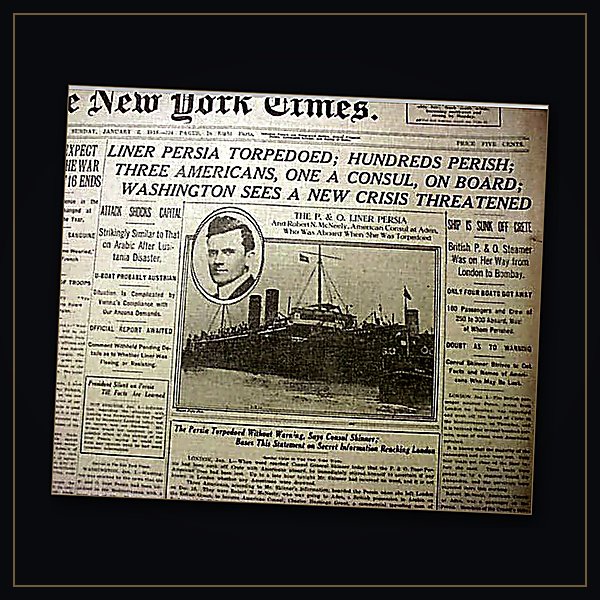
The photograph on sibling Persia notes is the New York Times front page of 2 January 1916. It is labelled. It is not a modern Beaulieu tourist shot. It is not a trademarked mascot product shot. This page uses the same front page for the same reason: the liner is in the public record. Eleanor Thornton place in the boat is the private sentence that sits eleven days earlier.
Margot Dorée wrote The Woman on the Bonnet in that lane. North Star Publishing Group published it. The book is live. Amazon B0HBQJ4MDM. Paperback B0HBR1RJFQ. Hardcover B0HBRBBQFQ. Nothing here is a partnership with a museum. Nothing here is a claim that Rolls-Royce asked for the novel. Palace House and the National Motor Museum are real places. They are not partners on this site. The artefacts are labelled.
If you searched Eleanor Thornton place in the boat, you were looking for the sentence in her letter. Eleven days before the Persia. Her place for him, even if he had to be stunned to take it. The book is where that letter sits in full context. The notes index holds the rest of the labelled doors.
Sources: Publisher A+ record for The Woman on the Bonnet (letter eleven days before the Persia; quoted boat line as already printed on this site’s story page; Eleanor as secretary to Lord Montagu; fifteen-year arrangement; The Whisper; Spirit of Ecstasy face; Sykes’s refusal to name the face; death on SS Persia / P&O liner Persia, 30 December 1915). New York Times front page of 2 January 1916 as already used on sibling notes. No invented cabin. No invented last hours. No claim that he took the seat. Novel independent, not affiliated with Rolls-Royce Motor Cars Limited.