North Star Publishing GroupNorth Star Publishing Group Available now

The proof

Every word of what follows actually happened.

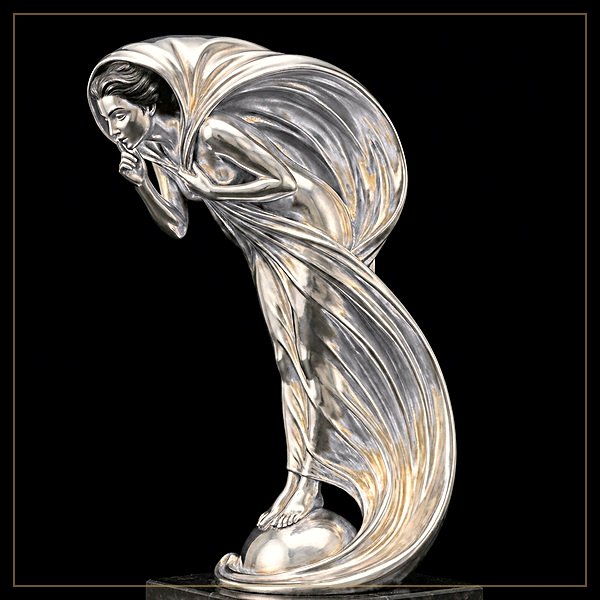
The Whisper by Charles Sykes. A silver statuette of a woman leaning into the wind with a finger laid across her lips, standing on an orb on a marble plinth.

He put her secret on the front of his car

Before Rolls-Royce had an emblem, Lord Montagu had one of his own. He commissioned it from the sculptor Charles Sykes, and Eleanor sat for it: a small silver woman leaning into the wind with one finger laid across her lips. Hush. Say nothing. He bolted it to the front of every car he owned and drove his secret through London in plain sight for twenty years, and not one person who ever saw it understood what they were looking at.

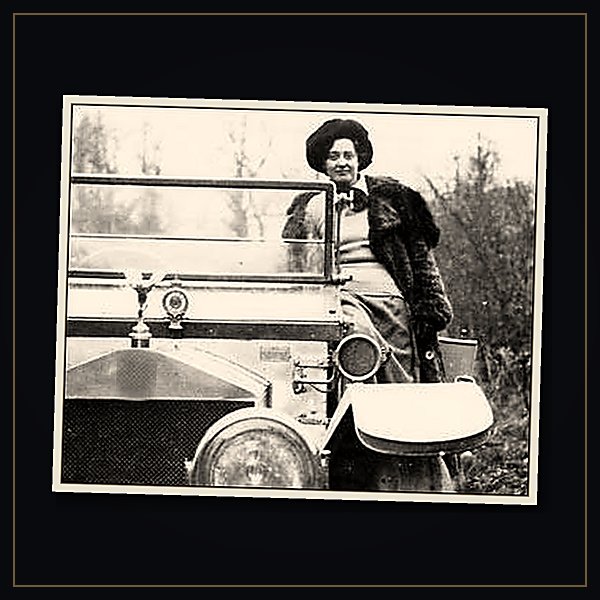
A period photograph of Eleanor Thornton, the woman behind the flying lady, in a fur coat standing beside a vintage motor car with a small silver figure on its bonnet.

She stood beside her own face and said nothing

This is Eleanor. It is one of the very few photographs of her that survive, taken on a winter afternoon beside one of his cars, and look at what is standing on the bonnet at her shoulder: the little silver woman, already cast, already being sold in showrooms on three continents. Rolls-Royce registered the figure on the sixth of February, 1911. Sykes was asked whose face it was for the rest of his life and never once answered. She was introduced to everyone present that day as a secretary.

Period photograph. Public domain in the United States.

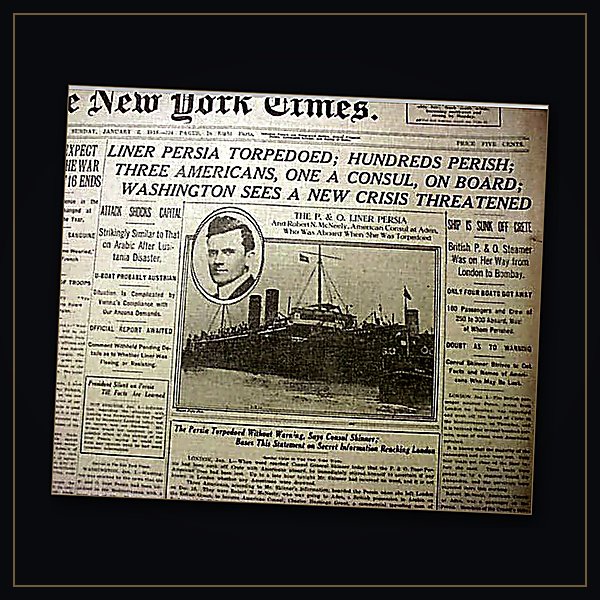
The front page of The New York Times of 2 January 1916 reporting the torpedoing of the liner Persia, a WW1 shipwreck of the P&O liner Persia, the SS Persia.

And then the sea took her

The New York Times, the second of January, 1916. Three days earlier, luncheon was being served aboard the P&O liner Persia off the coast of Crete, the loveliest day of the winter, when the torpedo struck without warning. She was forty years old and she had four minutes. Of the five hundred and nineteen people aboard, three hundred and forty-three were lost. Only fifteen women lived. She has no grave but the sea.

The New York Times, 2 January 1916. Public domain in the United States.

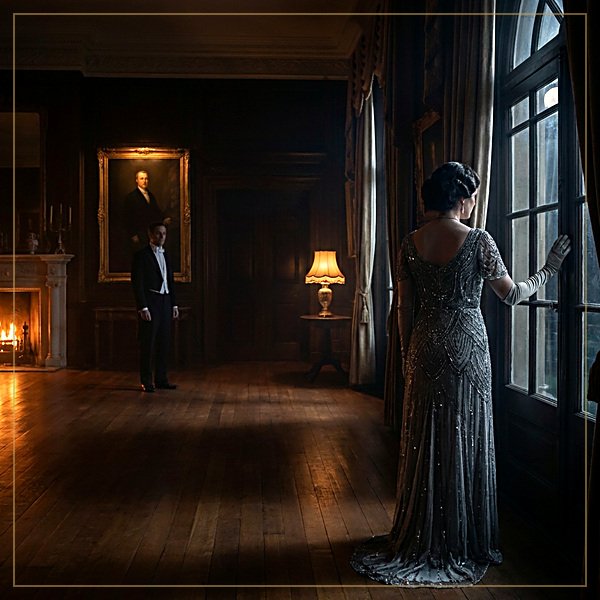
A woman in a beaded evening gown stands alone at a tall window in a candlelit Edwardian drawing room while a man in evening dress watches from across the floor.
Illustration. Not a period photograph.

Edwardian England forbidden love

For fifteen years the man who loved her sat three places down the table and was not permitted to look at her.

He was the second Baron Montagu of Beaulieu. Motoring pioneer, member of parliament, married into one of the great houses of England. She was a telegraph engineer’s daughter from Stockwell who had built herself, name and all, out of nothing.

“I fell in love with her at first sight,” he wrote. “But as I couldn’t marry her I felt I must keep away from her as much as I could.”

He could not. There was a daughter. The baby was given away at birth to be raised by an estate employee who could give her a surname society would accept, and she grew up calling her own father Uncle John. He visited. He asked how she did at her letters. He took her to the Ritz for oysters and made it their private ritual, in the most public dining room in England.

He never told her. She found out from a letter he had sealed, with instructions that it was not to be opened until after he was dead.

A shipwreck novel based on a true story

Eleven days before she drowned, she wrote to his wife and gave away her seat in the lifeboat.

It is the most extraordinary document in the entire record, and it is in Eleanor’s own handwriting. She made the arrangement privately, so that he could never overrule it:

“I think it will be best for me to make arrangements without telling Lord Montagu, so he cannot raise objections. The lord will have an extra chance, for there will be my place in the boat for him, even if he has to be stunned to take it.”

He lived. Thirty hours in the water, held up against his own will by an inflatable waistcoat he had bought over a shop counter days before. On a sickbed in Malta he said the only thing left to say: “I should have got a stronger grip on her.”

Then he went home and raised a memorial to her in his wife’s own parish church, where it still stands. It records that she served him devotedly for fifteen years. On permanent public display, and completely unreadable.

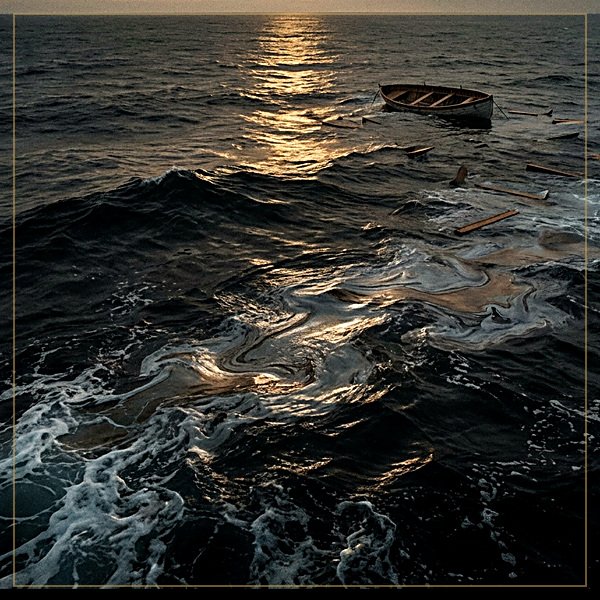
Dark open sea at low winter sun, oil sheen on the water and a single empty overturned lifeboat in the distance.
Illustration. Not a period photograph.

From the record

Notes on Eleanor Thornton and the Spirit of Ecstasy

Sourced notes on Eleanor Velasco Thornton, Charles Sykes, The Whisper, and the SS Persia. Period photographs are labelled as period.

Read it

You will never look at one going past you in the street the same way again.

She was worth a throne and she was given a secret. She has no grave. She has, instead, four inches of silver on the front of more motor cars than anyone alive can count, leaning into the wind, saying nothing, for a hundred years.

For readers of The Paris Wife and The Aviator’s Wife.

Beaulieu

The places that still hold her

Palace House. The National Motor Museum. Buckler’s Hard, where the Persia story is told and a memorial stands. They are the family seat of the Barons Montagu of Beaulieu. The novel is independent. It is not stocked there. Go if you can. The ground is real.